As a web developer and digital marketing strategist, one of the most common questions I hear from new clients is, “Is there something better than WordPress now?” It’s a fair question. With a constant stream of new website builders and all-in-one platform solutions hitting the market, it’s easy to wonder if you’re missing out on a simpler, faster, or cheaper solution.
WordPress is used by 43.3% of all websites, indicating its popularity and capabilities.
Having built, migrated, and repaired hundreds of websites across numerous platforms, I can tell you this: while there are many tools that look like WordPress alternatives, none truly replace it for serious, long-term business growth. Many users seek WordPress alternatives due to its complexity and the time required for setup and maintenance. Let’s talk about why.
What People Really Mean When They Seek “WordPress Alternatives”
When business owners look for an alternative to WordPress, they’re usually trying to solve a few common pain points. They want something with an easier setup, a lower upfront cost, fewer technical tasks to manage, and built-in tools that work right out of the box.
This leads them to three main categories of tools:
Ready to Transform Your Website?
Let our team at WP Wizards bring your vision to life — from design and development to SEO and automation. Tell us about your project below!
Request a Quote
"*" indicates required fields
- Hosted Website Builders: These are the popular drag-and-drop platforms that promise a beautiful website in minutes.
- Static Site Generators: These are developer-focused tools that create super-fast, simple websites.
- Other CMS Platforms: These are different types of content management system software, often referred to as WordPress competitors, such as Wix, Joomla, and others.
Users often look for website builders that are more user-friendly than WordPress, especially for specific use cases like blogging or eCommerce.
Each has its place, but the conversation shouldn’t be about which tool is “easiest.” It should be about ownership, flexibility, and control—the three pillars of a sustainable digital presence.
The Illusion of “All-in-One” Website Builders
A website builder with a slick drag-and-drop editor can feel like a dream come true. You pick a template, move a few things around, and your site is live. The convenience is undeniable, but it comes at a hidden cost.
We consistently see businesses hit a wall with these platforms due to their inherent limitations:
- Fewer Customization Options: You’re stuck within the visual and functional boundaries set by the platform. What happens when your business needs a feature the builder doesn’t offer? You’re out of luck.
- Locked-in Hosting: You can’t move your site to another hosting provider. If prices go up or performance goes down, you have no choice but to accept it or start over from scratch.
- Restricted SEO Tools: Many platforms advertise built-in SEO tools, but these are often basic. You get little to no control over advanced technical SEO, custom schema, or the subtle optimizations that help you outrank competitors on search engines.
- Limited Advanced Features and Additional Features: Need complex forms, a membership portal, or specific integrations? These platforms often lack these additional features or require you to pay extra for premium add-ons and integrations.
The short-term convenience of a website builder often leads to long-term frustration, higher costs, and a rigid online presence that can’t grow with your business.
Squarespace offers built-in marketing tools, analytics, and eCommerce functionality, saving users the trouble of hunting for and configuring third-party plugins.
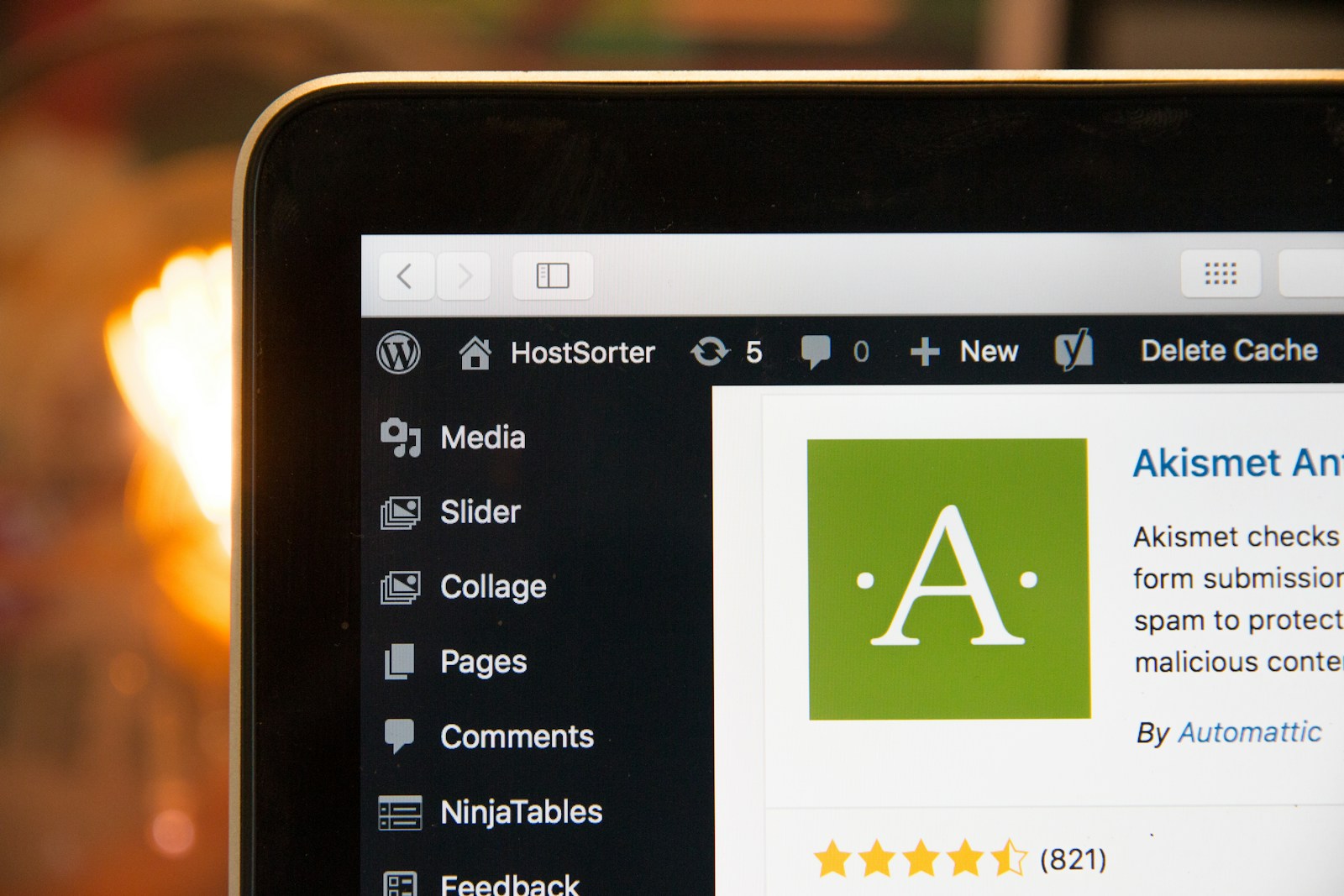
Photo by Stephen Phillips – Hostreviews.co.uk on Unsplash
Static Site Generator: Powerful, But Not for Most Businesses
On the other end of the spectrum, you have the static site generator. These tools produce incredibly fast and secure websites because they serve pre-built HTML files. For a developer, they are powerful and efficient.
However, they are not practical for the average business owner. Their steep learning curve requires significant coding skills, web development, and technical expertise. Everyday tasks like publishing a blog post or updating a service page often require a developer’s help. They struggle with dynamic functions like user management, robust content workflows, and most ecommerce features.
A static site is great for a developer’s portfolio or a simple brochure site that rarely changes. It’s not a good fit for a dynamic business that needs to create content, manage leads, and adapt to market changes. Statamic is a ‘flat-file’ CMS that doesn’t require a database, resulting in faster load times and higher security.
Why WordPress Still Wins as a Content Management System
So, where does that leave us? Right back at WordPress, and for good reason. As a true content management system, WordPress offers a combination of power and accessibility that remains unmatched.
Here’s why WordPress is often the best choice:
- It’s Free and Open Source: The core software doesn’t cost a dime. You own it. No company can change the rules on you or lock you out.
- You Choose Your Hosting: You can use a managed host or a self-hosted WordPress setup on your own server. You are in full control of your environment and your budget.
- Ultimate Flexibility: WordPress can power anything from personal sites to massive e-commerce sites and complex websites for global corporations. It’s a flexible platform that scales with your ambition.
This all boils down to ownership. With WordPress, you own your data, your design, and your digital future. That stability is the foundation upon which lasting businesses are built.
SEO, Ownership, and Control: Where Most Alternatives Fall Apart
Effective SEO is more than just filling in a keyword field. It requires deep control over your site’s technical structure, content, and performance. While many platforms offer “built-in features,” they rarely give you the granular control needed to compete.
With WordPress, you have complete command over:
- Advanced SEO Tools: You can install plugins like Yoast SEO or other powerful third-party plugins to manage everything from custom schema and redirects to sitemaps and robots.txt files.
- Site Speed Optimization: You’re not stuck with a platform’s slow servers. You can choose high-performance hosting, optimize images, and fine-tune code to make your site fly.
- Content Structure: You have the freedom to structure your content exactly how you want, which is crucial for ranking for competitive keywords.
With WordPress, you can install plugins like Yoast SEO to enhance your site’s SEO capabilities.
When search engines change their algorithms, a WordPress site can adapt. A site locked into a proprietary builder cannot.
E-commerce Reality Check: Online Stores Need Flexibility and E-commerce Features
Many e-commerce builders promise an easy way to build online stores. But this simplicity often comes with costly trade-offs. We’ve seen businesses struggle with high transaction fees, locked-in payment processors like Shopify Payments, and limited inventory management tools.
With WordPress and WooCommerce, you get a fully functional e-commerce engine that you control. There are no extra transaction fees, you can connect any payment gateway you want, and the e-commerce functionality is endlessly extendable. You can build an online store that works for your business, not for the platform provider.
Free WordPress Alternative: Is There a No-Cost Solution That Measures Up?
When budget is a top concern, it’s natural to look for a free WordPress alternative that can get your website off the ground without upfront investment. Platforms like Ghost, Medium, and Weebly are often at the top of the list for those seeking a no-cost solution with minimal technical barriers.
Ghost stands out as a free and open-source blogging platform designed for content creators who want a clean, distraction-free writing experience. It offers built-in SEO tools, supports subscription features for monetizing your audience, and provides a range of customization options—especially if you have some coding skills. For those comfortable with a bit of setup, Ghost can be a great way to launch a professional blog without ongoing fees.
Medium takes a different approach, offering a simple publishing platform with a built-in audience. You don’t need any technical expertise to start sharing your ideas, and the platform’s high domain authority can help your content get noticed by search engines. However, customization options are limited, and you won’t have full control over your site’s design or branding.
Weebly is another popular free WordPress alternative, especially for those who want to build a fully functional website using a drag and drop editor. With Weebly, you can choose from a variety of templates and use built-in SEO tools to optimize your site for search engines—all without touching a line of code. While it’s user-friendly, you may find fewer customization options compared to WordPress, and advanced features often require a paid upgrade.
Each of these platforms offers a straightforward website setup process and built-in tools to help you get started. However, the trade-off for a free plan is often less flexibility, limited scalability, and reduced control over your online presence. If your needs are simple—like launching a personal blog or a basic business site—these free WordPress alternatives can be a good starting point. But as your ambitions grow, you may find yourself outgrowing their capabilities and looking for a more robust solution.
In summary, while there are free and open-source platforms with built-in SEO tools and easy-to-use drag and drop editors, none truly match the flexibility, ownership, and long-term potential of a WordPress site. For businesses serious about growth, it’s important to weigh these limitations before committing to a free platform.
Plugins and Page Builders: A Strength, Not a Weakness
There’s a common myth that “too many plugins are bad.” The truth is that a well-chosen set of plugins is one of WordPress’s greatest strengths. Plugins allow for modular growth. You can add tailored functionality—from advanced analytics to a customer support portal—as you need it, making it a cost-effective way to scale. However, unlike WordPress, some alternative platforms offer built-in features and simplicity without relying on third-party plugins.
Similarly, a page builder isn’t a crutch; it’s a tool. When implemented strategically by a professional, it combines the ease of a visual editor with the power and flexibility of the WordPress ecosystem. Many teams are moving away from WordPress due to its limitations in scalability, flexibility, and content delivery.
Building WordPress, Your Way
The key difference most businesses miss is the value of an intentional WordPress build. For WordPress users, a cheap template on a DIY install is a world away from a strategic website crafted by experts. When we build a site at WP Wizards, we are creating a long-term asset.
This approach—combining the ownership of self-hosted WordPress with professional strategy and design—is what reduces your reliance on restrictive third-party platforms. You get the best of both worlds: control and convenience. The switch from WordPress to a headless CMS can help businesses build a flexible, efficient, and innovative digital presence.
Best WordPress: Unlocking the Platform’s Full Potential
To truly harness the power of WordPress, it’s essential to look beyond the basics and tap into the platform’s full range of features as a content management system. WordPress isn’t just a blogging tool—it’s a flexible platform capable of powering everything from simple personal sites to complex websites and fully functional online stores.
The real strength of WordPress lies in its customization options. With thousands of themes and plugins available, you can tailor your site’s design, functionality, and user experience to fit your exact needs. Whether you’re building a portfolio, launching an e-commerce site with advanced inventory management, or creating a multilingual business website, WordPress gives you the tools to make it happen.
SEO is another area where WordPress excels. The platform comes with built-in tools to help your content rank higher in search engines, including customizable meta tags, automatic sitemaps, and support for advanced SEO plugins. Many themes are optimized for speed and mobile responsiveness, both of which are critical for search engine visibility and user experience.
Choosing the right hosting provider is also key to unlocking WordPress’s potential. A quality host ensures fast loading times, robust security, and reliable uptime—factors that directly impact your site’s performance and your visitors’ trust. Many providers offer specialized WordPress hosting plans with built-in tools for backups, updates, and malware scanning, making technical tasks more manageable even for non-developers.
While WordPress does require some technical expertise to get the most out of its advanced features, the platform’s intuitive interface and rich ecosystem of website-building tools make it accessible to users at all skill levels. With the right combination of plugins, themes, and support, you can create a website that not only looks great but also drives results for your business.
In short, the best WordPress experience comes from leveraging its full suite of content management, ecommerce functionality, and SEO tools—supported by a reliable hosting provider and a strategic approach to web design. Whether you’re a solo entrepreneur or a growing business, WordPress offers the flexibility and scalability to help you achieve your online goals.
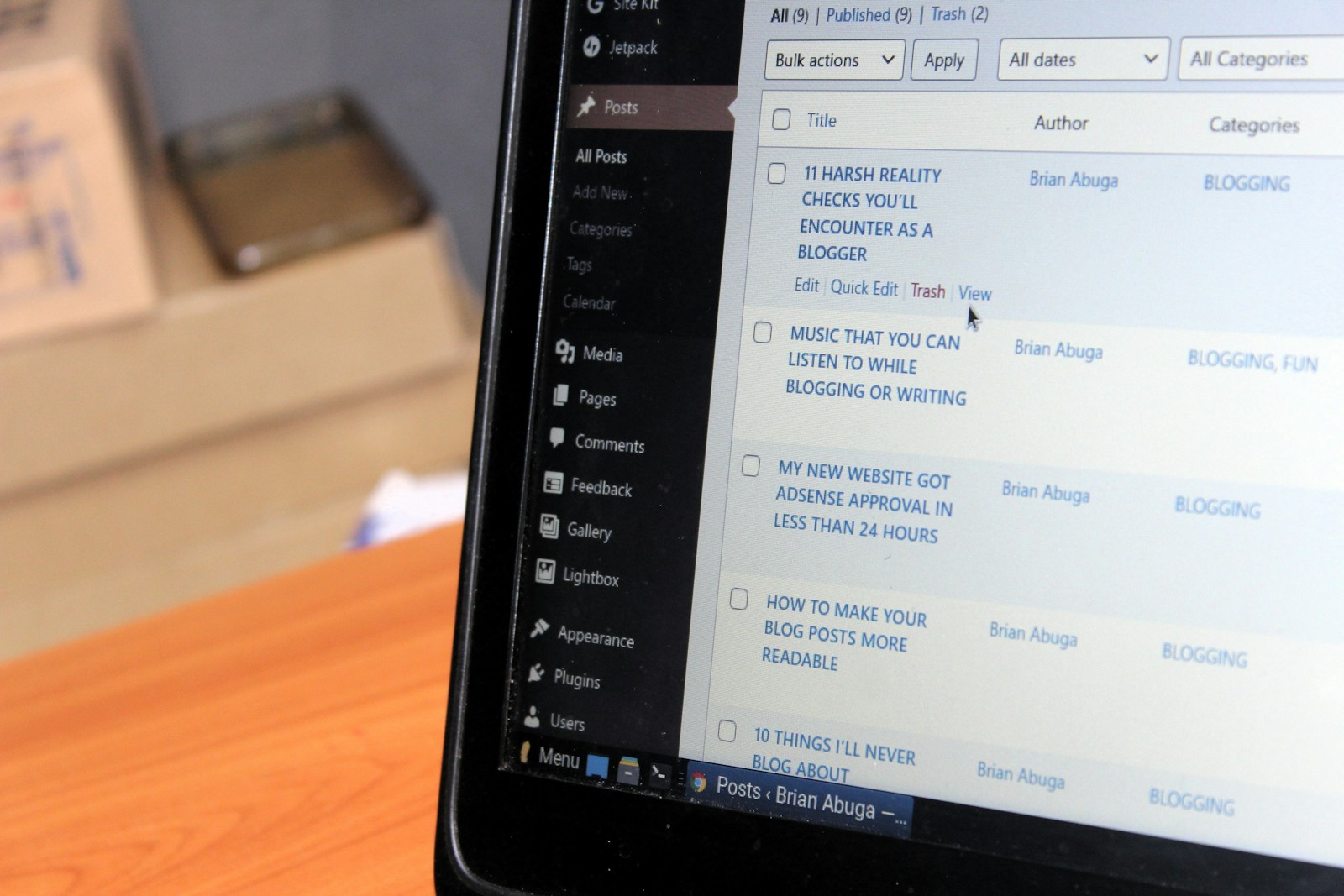
Photo by Brian Abuga on Unsplash
Why We Still Recommend WordPress at WP Wizards
As a Marine veteran-owned agency, we build our client relationships on the same values that guide us: precision, reliability, and accountability. We don’t chase trends. We make data-driven decisions that deliver measurable results. While we believe WordPress is the best fit for most of our clients, we recognize there are great WordPress alternative options available that may better suit specific needs, such as all-in-one solutions or platforms designed for beginners.
For us, WordPress remains the best foundation for a serious business in 2026. It provides the stability, control, and scalability our clients need to achieve their goals. We build long-term partnerships, and that starts with building on a platform that has a future. Drupal is renowned for handling complex, enterprise-level projects and is a leading open-source CMS, making it a strong choice for organizations with advanced requirements.
There Are Tools, But No True Replacements
So, are there the best WordPress alternatives? Yes, there are plenty of tools that can help you create a website. Some platforms are considered an excellent WordPress alternative for certain users, offering features like easier management or specialized tools, but they still don’t fully replace WordPress. But are there any true replacements for a platform that gives you full ownership, unlimited flexibility, and the power to grow without limits? No.
Don’t let the appeal of a quick fix compromise your long-term vision. Think beyond templates and trends. Choose the platform that adapts to your business, not the other way around.
Ready for a website that works as hard as you do?
Let’s Build Your Digital Success Story.